–44% non-organic waste
Total non-organic waste production fell sharply in 2024, largely driven by reductions at ISIS — SEKEM's primary contributor to non-organic waste output.
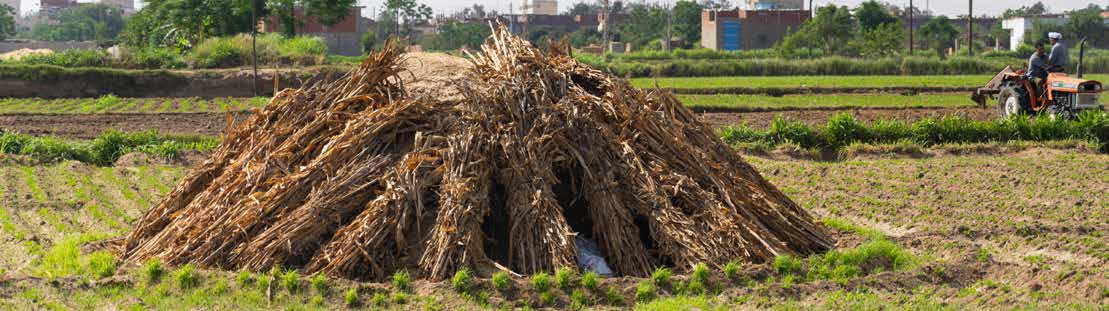
"Egypt is a model for waste reduction and management with all the companies practicing the circular economy concept."
Vision 2057 Aspiration
Related SDGs
Egypt generates massive amounts of waste annually, heavily reliant on landfilling. Moving toward a circular model is essential for environmental health and resource efficiency.
Plastic waste specifically poses a critical threat to the Nile ecosystem and agricultural soils, demanding urgent systemic change in production and consumption.
The Ministry of Environment is increasing investments in recycling infrastructure, signaling a national pivot that requires private sector leadership and innovation.
Transitioning from linear "take-make-dispose" to circular systems requires redesigning product lifecycles from raw material extraction to end-of-life recovery.
SEKEM implements circular economy principles across all operations, aiming to close material loops, minimize virgin resource extraction, and design out waste. This requires a holistic view of our supply chain and manufacturing processes.
We prioritize sustainable packaging solutions. For ISIS products, we are actively shifting towards carton and paper alternatives where feasible, significantly reducing single-use plastic reliance while maintaining product integrity.
Our dedicated facility in Belbeis serves as the central hub for our non-organic waste management. Here, waste from various SEKEM entities is meticulously sorted to maximize recovery rates for recycling partners.
Organic waste is never truly 'waste' in the SEKEM model. Agricultural byproducts and organic processing waste are systematically composted, returning vital nutrients to our biodynamic soils, closing the biological cycle.
SEKEM and Heliopolis University are disseminating the Circular Economy concept widely.
Recycling Rate
of non-organic waste recycled
Total non-organic waste
Reduction in total waste
Packaging material (ISIS)
kg/1000 EGP relative waste
Chart: Recycled Waste Growth
(79% → 90% → 99.8%)
Chart: Waste by Entity
(Atos, Lotus, Naturetex, ISIS)
Total non-organic waste production fell sharply in 2024, largely driven by reductions at ISIS — SEKEM's primary contributor to non-organic waste output.
RDC collected 283.5 tonnes of waste from SEKEM entities and surrounding 13-village communities, plus 629 tonnes of palm waste in Wahat — repurposed as a sustainable peat-moss alternative for eco-friendly agriculture.
New waste-sorting facility at Belbeis processes company waste; organic waste goes to compost. Wahat recycling factory successfully established on-site.
Community workshops and a summer school for 13-village participants — focusing on waste management, recycling, and upcycling as tools for environmental sustainability and community empowerment.
Egypt faces an expected 745,985 tonnes of mismanaged plastic waste in 2023 — a significant driver of the country's environmental footprint. SEKEM's circular model contributes directly to the solution.
Expand infrastructure for converting organic waste into biochar for soil amendment and biogas for localized energy production.
Launch comprehensive HU student programs to design and implement campus-wide closed-loop material systems.
Explore how Circular Economy connects to our holistic 2057 goals.