Sustainable Water Management
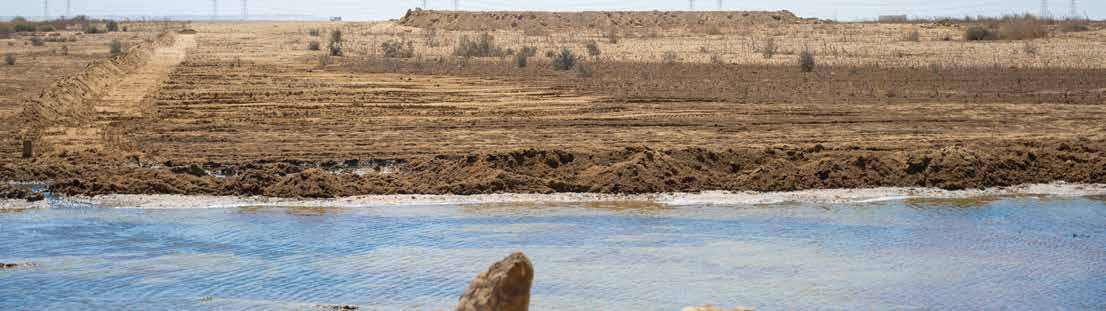
In Egypt, an optimized water management system ensures that water consumption is minimized, wastewater is reused, and innovative water collection methods are implemented.
The Context of Scarcity
Egypt faces unprecedented challenges in securing sustainable water resources for its growing population and agricultural needs.
Below Poverty Line
Egypt's per-capita water share is ~560 m³ — far below the 1,000 m³ international water poverty line.
Extreme Aridity
Annual rainfall across most of the country is merely 20–30 mm, offering negligible natural recharge.
Multiplying Pressures
Climate change and rapid population growth are aggressively accelerating water scarcity nationwide.
Agricultural Dominance
Agriculture accounts for a staggering 85% of Egypt's total national water usage.
Inefficient Legacy
Traditional Nile Delta flood irrigation techniques lose up to 40% of applied water primarily to evaporation.
"By 2027, SEKEM and Heliopolis University have optimized their water consumption and developed scalable models for wastewater recycling, desalination, and air-water recovery for dissemination across Egypt."
Performance 2024
Key metrics tracking our water stewardship progress.
Total Ag Water arrow_upward
Increased from 4,823 due to Minya farm restart.
Share from Fossil Sources arrow_downward
Improved from 76% in 2023 through efficiency.
Consumption per Hectare arrow_downward
Decreased significantly from 12,000 in 2022.
MED-WET Community Impact
Smallholders benefiting
Vision Progression
[Vision Flower Component Mount Point]
Water initiatives in 2024
MED-WET project · HU Engineering
Nature-based, cost-effective wastewater treatment unit. In its final testing phase, the unit demonstrated 91% pollutant removal efficiency. Now installed at Wahat and Belbeis, benefiting over 10,000 smallholder farmers.
Nighttime irrigation — DEG DeveloPPP
Solar-powered irrigation project. Two crop cycles analyzed; ground-leakage issues in the reservoir identified and specs revised. HU students now engaged in applied-learning and technical skill development via the capacity-building stream.
Water-footprint initiative — SEKEM-wide
Every employee calculated their personal water footprint and joined group workshops to develop action plans for water-consumption reduction — individually and organizationally.